




We’re a quarter-century into the new millennium. As millennials begin to feel their age, the franchises they came of age with — Toy Story, Jurassic Park, the Star Wars prequels, The Lord of the Rings — are beginning to feel like legacy properties. But for better or worse, one pop-cultural phenomenon maps onto the experience of millennials more precisely than all the others: Harry Potter. The impact of the boy who lived is undeniable, but the franchise isn’t exactly aging well.
In print, Harry Potter is the best-selling series of all time, with more than 600 million copies purchased to the tune of more than $7 billion. On screen, the brand has generated about $9.5 billion. And let’s not forget about the theme parks, video games, flagship stores, and licensing deals. There’s also a stage show, Harry Potter and the Cursed Child, and the original Draco Malfoy himself, Tom Felton, will be headlining the Broadway production starting in November. While some fans were undoubtedly thrilled by this news, the play and Felton’s casting are curious bellwethers about the franchise, the fandom, and its future.
‘Harry Potter and the Cursed Child’ Marked a Turning Point for the Brand
Warner Bros.
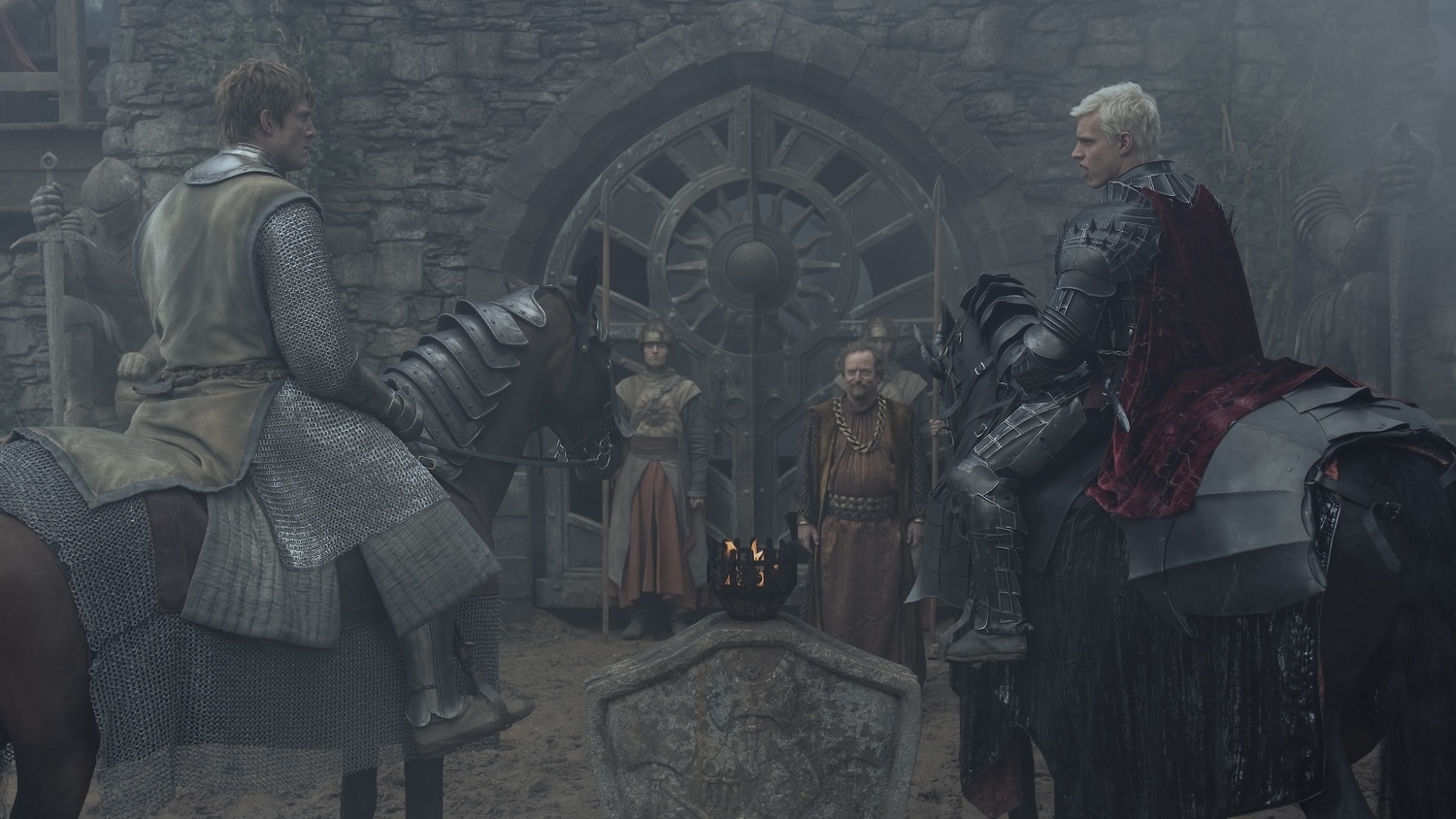
Harry Potter and the Cursed Child, co-written by J.K. Rowling and Jack Thorne, was released as a hardcover book on July 31, 2016 (the titular character’s and Rowling’s birthday), when the masses still lined up at bookstores for midnight launch parties. The story follows the sons of Harry and Draco as they’re assigned to be roommates at Hogwarts. For the first time, the reception was decidedly lukewarm. While those who saw the show (which premiered in London before coming to New York) appreciated the spectacle, readers bristled at the script format as well as inconsistent characterizations and plot holes.
It was still tough to snag a ticket back then, and theatergoers actually needed two. The five-hour-long play was designed to be seen in back-to-back performances. Eventually, the runtime was cut to 3.5 hours and a single sitting; producers cited practical and financial concerns. Harry Potter and the Cursed Child proved that the franchise wasn’t impervious to discontent. Throughout this time, Rowling and Warner Bros. also released three (out of five planned) increasingly disappointing Fantastic Beasts movies. Plenty of IP has been mismanaged before and survived. Ask any Jurassic Park, Star Wars, DC, or Marvel enthusiast. But as the 2010s came to an end, the magic of Harry Potter was fading. And that was before Rowling began tweeting about transgender people.
Tom Felton’s Return to the Role of Draco Malfoy Is a Canary in a Coal Mine
Warner Bros. Pictures
Rowling’s vitriol for the trans community has become so much a part of her identity that it’s put both the professionals associated with the franchise and the fans who grew up with it in an uncomfortable position. One’s stance on Rowling has become something of a litmus test. Many who support trans rights choose to separate the art from the artist, but others who once proudly claimed membership in Hufflepuff or Ravenclaw now disavow Harry Potter and refuse to financially support the author.
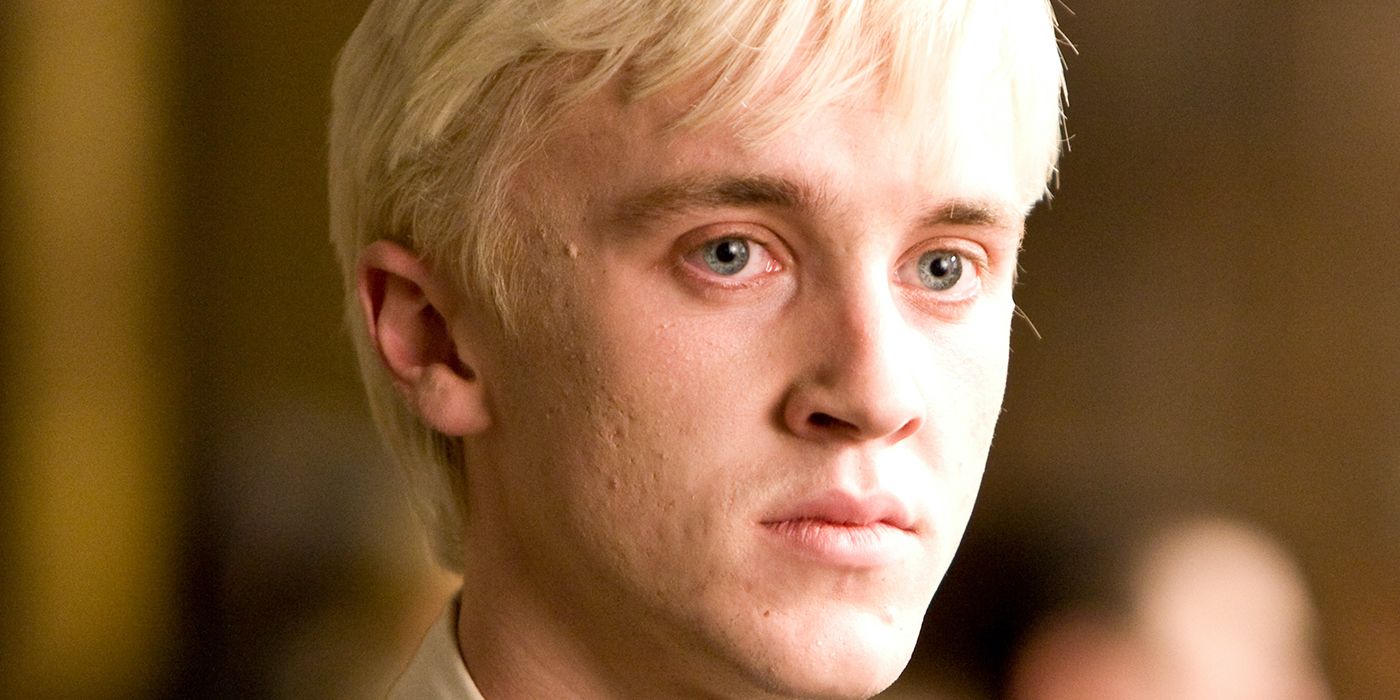
While Daniel Radcliffe, Emma Watson, and Rupert Grint have spoken out against Rowling’s point of view, Tom Felton has been more equivocal, saying only that he’s grateful for Harry Potter and the opportunities it afforded him. It’s no surprise that he’s the actor reprising his role. Felton was slated to appear on Broadway from November 11, 2025, through March 22, 2026, with ticket prices ranging from about $100 to $350. Producers expected such demand, and a pre-sale lottery was advertised via email. His run was recently extended to May 10, due to “high demand.” However, seats are still available for most performances. On some days, the theater is barely half-full.
Meaning no offense, Felton is more of a star within the Potter world than in general. But 10 years ago, those shows would’ve sold out in seconds at higher prices. A cynic might say that Cursed Child was nearing the end of its tenure, Felton’s career had stalled, and his casting is a gimmick to squeeze some nostalgia bucks out of well-off-enough 40-something Potterheads. But his not-so-limited engagement as adult Draco probably won’t be considered a failure, either.
Most of those seats will sell, and the show will make money, just as people will keep flocking to the Wizarding World in Orlando and Hollywood, and they’ll keep buying LEGOs and Loungefly backpacks at the mall. Harry Potter isn’t going away. It’s just that — as is so often the case — oversaturation, lackluster output, a problematic creator, and time have diminished the once all-powerful brand. That fans have the chance to see Felton’s Malfoy in person, but aren’t absolutely clamoring to, shows that Potter hysteria is leveling out.
You can view the original article HERE.