





Singer, songwriter, and founder Luma Valen is defining her own space in global pop. Blending cinematic pop, soul, classical instrumentation, and deep emotional consciousness into a sound signature she calls “The Luma Frequency,” the Puerto Rico-born artist is taking a long-term approach to both her craft and her business. Following a massive performance for the UN International Day of Peace concert reaching 1.6 billion global viewers, Valen is charting an ambitious path forward. In this exclusive interview with Entertainment World News, Valen discusses her single-driven release strategy, collaborating with legendary producer Humberto Gatica, using digital platforms to amplify human connection, and her broader vision for Luma Valen Entertainment—a multidisciplinary powerhouse built on creative integrity, international reach, and core values. Read on as Luma Valen opens up about her creative process, navigating the business side of the music industry, and what it truly means to build a legacy with heart.
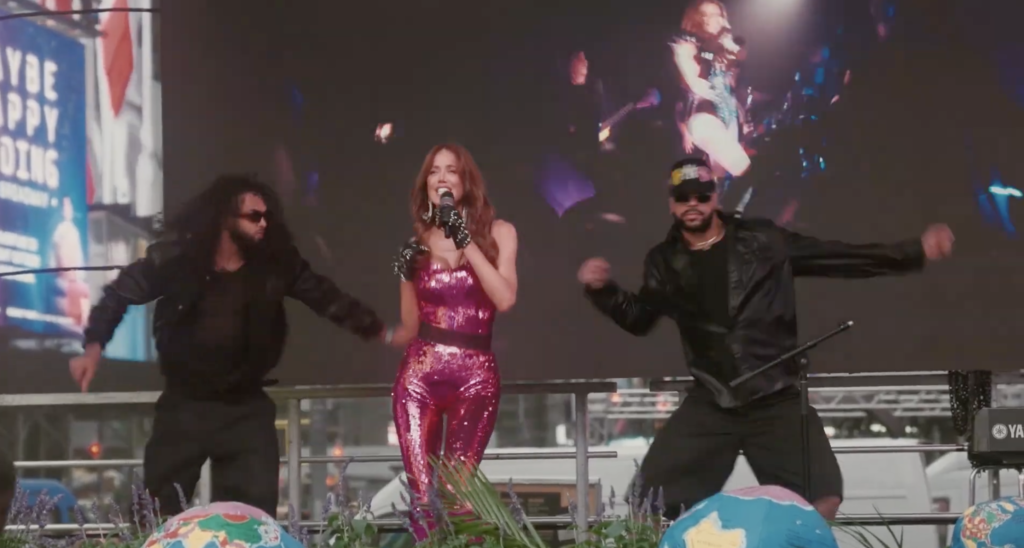
- Performing for the UN International Day of Peace concert reaching an estimated 1.6 billion global viewers via live stream and rebroadcast is a massive global reach. How does your team strategically approach international audience expansion?
For me, international growth begins with the music being emotionally universal. Love, friendship, heartbreak, hope, resilience and the desire to feel connected are not limited by geography or language.
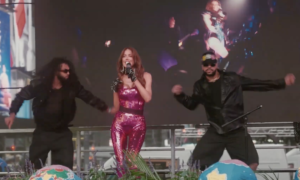
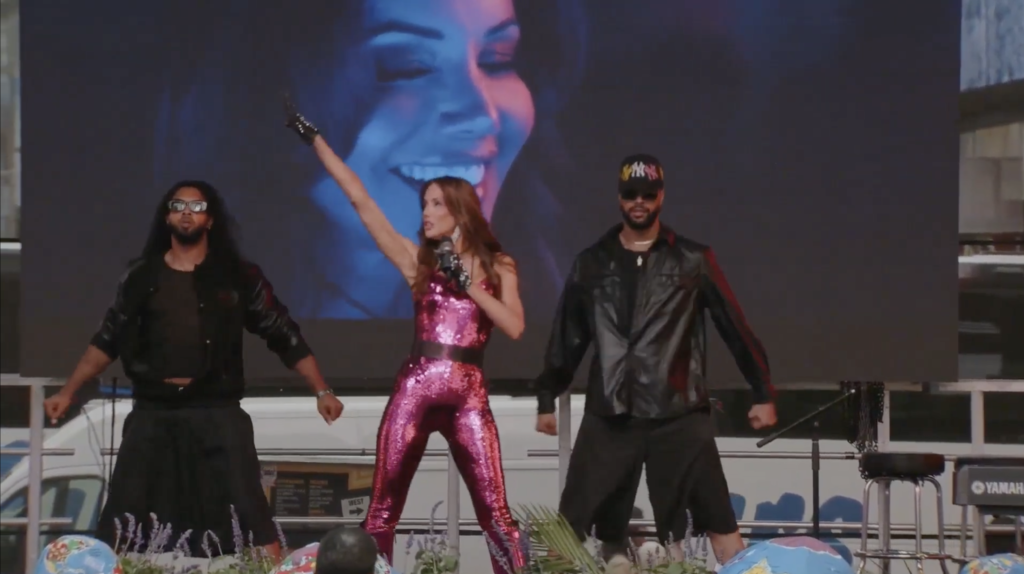
Performing in Times Square for the International Day of Peace was especially meaningful because it placed the music within a global conversation about connection and humanity. As we expand internationally, my team approaches growth through digital distribution, live performance, media, strategic partnerships, creator campaigns and eventually multilingual releases.
I was born in Puerto Rico, developed much of my career in New York, have worked extensively in Los Angeles, and have always seen Luma Valen as an international project rather than one confined to a single market. The goal is to build genuine communities around the music in different parts of the world, not simply accumulate numbers.
2.. You describe your signature sound as “The Luma Frequency”—a blend of cinematic pop, soul, classical violin, and spiritual consciousness. How did you conceptually develop this genre?
The Luma Frequency developed naturally from who I am and everything I have experienced musically.
I grew up singing from a very young age and later studied flute and violin, so classical instrumentation has always been part of my musical vocabulary. At the same time, I love the emotional immediacy of pop and soul and the scale and drama of cinematic music.
But the frequency is more than a production style. It is about intention. I want the listener to feel something underneath the sound. Whether a song is about friendship, romantic love, loss, empowerment or transformation, there should be something in it that moves you internally.
That combination of cinematic production, classical influences, soul, pop and emotional consciousness became what I call The Luma Frequency.
- You’ve released a steady stream of singles in 2026, including “Alive,” “Swept Away,” “Make It,” “Love,” and “Sad Eyes.” How does this single-driven release strategy fit into your broader plans for a full-length album project?
Each single is a chapter of a much larger body of work, and each one reveals a different part of who I am as an artist.
“Alive” is about friendship, human connection and those people who lift you up and remind you what it feels like to truly be alive.
“Swept Away” is the romantic side of the project. It is about that almost cinematic feeling of falling deeply into a moment with someone and allowing yourself to be completely carried away by love.
“Make It” is about perseverance, ambition and continuing to believe in yourself and what you are called to do, even when the road becomes difficult. It comes from that internal determination to keep moving forward and make the vision real.
“Love” goes to the heart of what I believe as an artist. It is about the power of love itself, how it connects us, heals us and has the ability to transcend so many of the things that divide us.
And “Sad Eyes” explores a more vulnerable emotional space. It speaks to heartbreak, sadness and the feelings we sometimes carry beneath the surface, even when the rest of the world may not see them.
I have been writing music for many years, so these songs were never created simply to chase a series of singles. There is already a much larger world and catalog behind them. Releasing them individually allows each song to have its own moment and gives listeners time to understand the different emotional dimensions of my music.
When you put them together, you begin to see the bigger picture: friendship, romantic love, heartbreak, perseverance, healing and human connection. Those themes are all part of the same journey.
Ultimately, the singles are introducing audiences to that world piece by piece, with the intention of bringing those chapters together into larger projects where people can experience the full story and the full spectrum of The Luma Frequency.
- How has collaborating with Humberto Gatica refined your approach to song structure, vocal arrangement, and production quality?
Working with Humberto has been incredibly valuable because of the level of detail he brings to a recording.
When you work with someone who has spent decades around extraordinary voices and landmark records, you become very conscious of the difference between something being good and something being truly finished.
He listens to the architecture of the song, the emotional intention of a vocal and the smallest production details. That has encouraged me to become even more disciplined about how every element serves the song.
For me, the greatest lesson has been that production should never overpower emotion. The technology, arrangement and vocal production should ultimately make the listener feel the song more deeply.
- As the founder of Luma Valen Entertainment, how do you navigate the business side of the entertainment industry while maintaining your creative integrity?
Building Luma Valen Entertainment has allowed me to think beyond being only the artist. I am building a company that can support the creative vision, protect the work and give it the opportunity to reach people around the world.
I am closely involved in decisions concerning my masters, visual identity, distribution, marketing, live performances and collaborators. For me, our values cannot exist only in a mission statement. They have to be reflected in whom we hire, how we treat people, the partnerships we enter and the work we put into the world.
We are building deliberately. I have turned down opportunities when the vision did not align, because growth is not simply about accepting everything that comes your way. It is about understanding what you are building and choosing what genuinely belongs in that future.
At the same time, protecting the vision does not mean doing everything myself or being closed to other perspectives. It means surrounding myself with specialists, setting clear expectations and giving talented people the trust and space to do what they do best. I welcome strategy, data and commercial insight. The question is how we use those tools to strengthen the work without losing what makes it meaningful.
Our mission is to create exceptional music and entertainment with integrity, purpose and heart. Excellence matters to me, from the songwriting and human voice to the production and the experience we give an audience. So does our impact. I want us to create work that helps people feel understood, inspires hope, connects cultures and gives families something meaningful to share across generations.
I do not see commercial success and creative integrity as opposing goals. I want to build a sustainable company because that allows us to keep creating and contributing over the long term.
The business should amplify the vision. The vision should not be rewritten simply to satisfy the business.
- You began your career in high-fashion modeling before stepping fully into the music industry. How do the distinct entertainment sectors inform your visual storytelling in music videos and stage design?
Modeling has influenced how I carry myself and perform, but I separate that from where my creative vision comes from.
It helped me become comfortable with my body. Through repetition, I learned how to use movement and facial expression to convey a mood without consciously thinking about every gesture. It becomes almost automatic. That experience allows me to feel more at ease in front of a camera and express emotion more naturally.
But the ideas behind my music videos and stage concepts come from the same magical place where the songs are born. They grow out of stories from my life, experiences and emotions that I want to share in a way people can relate to. The song is the starting point. I imagine how to bring its world to life so that someone can recognize something of their own story within it.
I see my role as the artist and visionary. I can explain in detail what I imagine on a stage, the atmosphere I want to create and what I want the audience to feel. But I am not a stage designer. That is its own art, and I respect the expertise it takes to translate an idea into something that works creatively and technically.
Part of bringing a vision to life is knowing where to invite other people’s talents into it. I want to work with experts who can contribute their creativity, explain what is possible and help determine how best to realize the concept. Having a clear vision does not mean you have to be the expert in every discipline.
Modeling has helped me express emotion through my body and face. The music gives me the stories I want to tell. Bringing those stories to the stage or screen is a collaborative art.
- The Pause the World for Peace concert was cross-promoted across major global platforms. What role do live-streamed mega-events play in the modern music industry compared to traditional touring?
I don’t think livestreamed events replace touring. I think they expand who can be part of a live experience and how we can come together through music.
What excites me is that you are no longer limited to one venue or one location. Artists can perform live from different parts of the world and still participate in the same streamed event. Multiple venues and audiences can be connected at once, celebrating the same occasion or supporting the same purpose. For an event centered on peace, that possibility is especially meaningful to me. We can be physically far apart and still share a moment of connection.
There is something irreplaceable about being in a room with an audience, feeling their energy and responding to one another in real time. That is what makes traditional concerts so special. But a livestream allows someone in another country to experience a performance they might otherwise never have had the opportunity to see.
As an artist, one of the most exciting possibilities is building a connection with listeners in places I have not yet visited. I believe that can help an international audience grow more quickly, because people do not have to wait for a tour to reach their country before they can experience a live performance.
I see the two working together. Livestreaming can introduce people to the music and help build a relationship that we can later deepen in person through touring. Ultimately, I want the music to reach people wherever they are. Geography should not have to be the boundary of that connection.

- As a Puerto Rico-born artist, how do you view the global explosion of Latin-influenced and crossover artists in the mainstream music market today?
What excites me most is seeing artists reach the world without having to leave their culture or identity behind. To me, that is a reminder that being authentic does not have to limit your audience. It can be the very thing that connects you to people.
I was born in Puerto Rico and moved to the mainland United States when I was eleven. Puerto Rico has my heart and soul. I visit every year, and that connection is part of my everyday life, from the food to the music to the way I express myself. At the same time, growing up here introduced me to music in English that I came to love just as deeply. Both are part of who I am.
I love singing in Spanish, but English also became a natural way for me to write and connect with the people around me. Sometimes I feel as though my heart is pulled in two directions when I am writing. Rather than force a choice, I let the song flow in the language it wants to come through. Some emotions come to me in Spanish, others in English, and I want to honor that.
I currently have five songs released, and I am working toward releasing another ten to twelve this year, including music in Spanish. I am especially excited about releasing “Yo Soy Tuya” as my first Spanish single. It is an opportunity to share another part of myself with the audience, one that has always been there.
Musically, I also love incorporating Latin influences alongside electronic sounds. I want those elements to feel connected, not simply added as decoration. That cultural understanding is one of the reasons I felt Humberto and Carlos would be such a good creative fit. It matters to me to work with people who understand the feeling behind those influences and can help bring them into the music authentically.
For me, this is not about changing who I am to enter a different market. It is about allowing more of who I am to be heard. My music is a meeting of both worlds, and I do not want to place boundaries around where it can go or whom it can reach.
- How do you integrate your philanthropic partnerships with organizations like Alex’s Lemonade Stand Foundation into the commercial strategy of your brand?
I don’t approach philanthropy as a commercial strategy. We have supported Alex’s Lemonade Stand Foundation for more than ten years. That commitment is personal and comes from a genuine desire to help children and families, not from a business objective.
I love children deeply, and I am especially concerned about those whose needs are going unmet right in our own communities, including close to where I live. Sometimes we imagine that suffering is happening somewhere far away, when families are struggling in our own backyards. It breaks my heart that we can be surrounded by so many resources and still have children who are not receiving the support they need.
For some time, I have been thinking about becoming involved in a new initiative to help children in need. I have also been exploring ways to support orphaned children in Puerto Rico. These are possibilities I am still looking into, and I want to understand where I can make a meaningful contribution.
My music centers on love, healing, empowerment and reminding people that they are not alone. For me, those values need to extend beyond the songs into how I live and what I support. Philanthropy is not something separate that we attach to the company’s identity. It is an expression of what matters to us.
As Luma Valen Entertainment grows, I want to use that platform to bring more attention, resources and opportunities to organizations and initiatives doing meaningful work. Building a sustainable business can give us a greater ability to contribute, but the people we are helping must remain the purpose.
Success becomes much more meaningful when what you build can also make life better for someone else.
- With platforms such as TikTok playing a huge role in track discovery, how do you balance writing music for deep emotional resonance with creating content that appeals to short-form algorithms?
The songs always come first. I write music with the intention of moving people, opening a heart, transforming a feeling or taking someone to a more hopeful place than where they were before they began listening. That is what I mean by frequency. It is not only what you hear, but what you feel and carry with you afterward. I cannot create from that place while thinking about an algorithm.
The music has to stand on its own. Once a song exists and we have brought it to life as a record, I love exploring how its emotion can translate into short-form content. My goal is to use imagery to draw people into the story and help them feel what I am expressing through the music.
We have learned that posting consistently can increase our chances of reaching people, but reach is not the ultimate goal. Our goal is to perform live and connect directly with audiences through venues, events and livestreams. I want people to experience the songs, hear the stories behind them and share those moments with us.
With “Swept Away” and “Make It,” we have had more than four million views combined on TikTok alone. But what touched me most was seeing people share such beautiful, personal moments of their lives through the songs. These were stories we had not scripted or imagined. People were bringing their own meaning to the music, and it felt as though they had caught the frequency and were sharing it in their own way.
I have also received incredibly heartfelt messages from listeners. Those connections make me want to keep writing and releasing more music. They remind me that a song does not end with my experience of creating it. It becomes part of someone else’s life.
Ultimately, we can put the music in front of people, but we cannot decide what it means to them. They choose whether it speaks to them and whether they want to share it. We have accomplished things with very limited resources that have felt like miracles to me. That has reinforced my belief in how powerful music can be when it genuinely touches someone.
That human connection is also why I feel so strongly about protecting the human voice and human creativity. I am strongly opposed to replacing human songwriters, singers and musicians with AI-generated music. For me, music is inseparable from the humanity behind it. An artist can share why a song was written, what inspired it and what it means to stand in front of an audience and sing it. I do not believe AI can replace that lived experience. We need places where we can tell one another our stories, learn, grow, love and cry together.
That is the balance for me: using digital platforms to help people discover the music without allowing those platforms to dictate its purpose. The content helps us share it. The human connection is why we do it.
- Where do you see Luma Valen Entertainment expanding over the next five years across film, fashion, and global music distribution?
I see Luma Valen Entertainment growing into a multidisciplinary entertainment company with music at its center. But I see the next five years as part of a much longer journey, not a boundary around what is possible. Some opportunities may develop sooner, while others will need time. We have clear goals, but we also want to allow room for the vision to evolve naturally. We are building something for the long run.
Music remains the foundation. My goal is to create and release at least twelve songs a year for my own catalog and performances, while also beginning to write for other artists. I want to release music in multiple languages, expand our international distribution and connect with audiences through live performances around the world. I also want to develop opportunities for the music in film and television, where a song can become part of a story and take on another dimension.
But I also want to build something larger than my own career. I would love for Luma Valen Entertainment to become a home where other artists, meaningful ideas and creative projects can develop without people having to sacrifice their humanity or compromise their values to succeed commercially. That is deeply important to me. It has to be reflected not only in what we create, but in how we work and treat one another.
I believe music carries a frequency that can move, transform and uplift us. Our company is dedicated to bringing that intention to life through excellence in the songwriting, the human voice, the production and the experience we give an audience. I want us to create work that helps people feel understood, find hope and connect with one another, a work that families can share across generations.
The vision is global, but the purpose is personal: to bring meaningful music and entertainment into people’s lives and build a company that can keep doing that with integrity for years to come.