








Aside from a few early black comedies, actor Robert De Niro is most widely known for his more violent characters. After playing one of four disturbed brothers in the early 1970s film Blood Mama, De Niro solidified his crime‑genre reputation with iconic roles in The Untouchables, Once Upon a Time in America, and Heat. Given this palpable reputation, it’s quite surprising that De Niro opted to star in a much more faith-based feature in 1986. That movie also became one of the greatest religious films of all time.
Also featuring some other notable actors, such as Jeremy Irons, Liam Neeson, and the famed Irish actor Ray McAnally, The Mission sought to spotlight the lives of an indigenous tribe called the Guaraní, who were in the process of forming a relationship with Christianity. Located in the forests of South America, they were once protected by the Spanish. That is, up until the 1750s. But through the Treaty of Madrid and the hasty Portuguese, a dangerous and hostile takeover is approaching, and innocent Jesuit missionaries (played by De Niro and Irons) are caught in the middle.
As the movie shows, it’s not easy traveling to the Guaraní tribe, nor is it a simple task to get to know them. Besides rowing against a fearsome stream in the waterfall system leading there and climbing up a perilous cliff face, there’s also a chance you could be thrown to your death once you reach the summit. The Guaraní don’t have to be nice. After accomplishing the first two, Irons’ Father Gabriel achieves the third by remaining quite still in their presence and just carefully playing his oboe. Even though it’s broken in half by an elder, the younger ones welcome him and take him to their village.
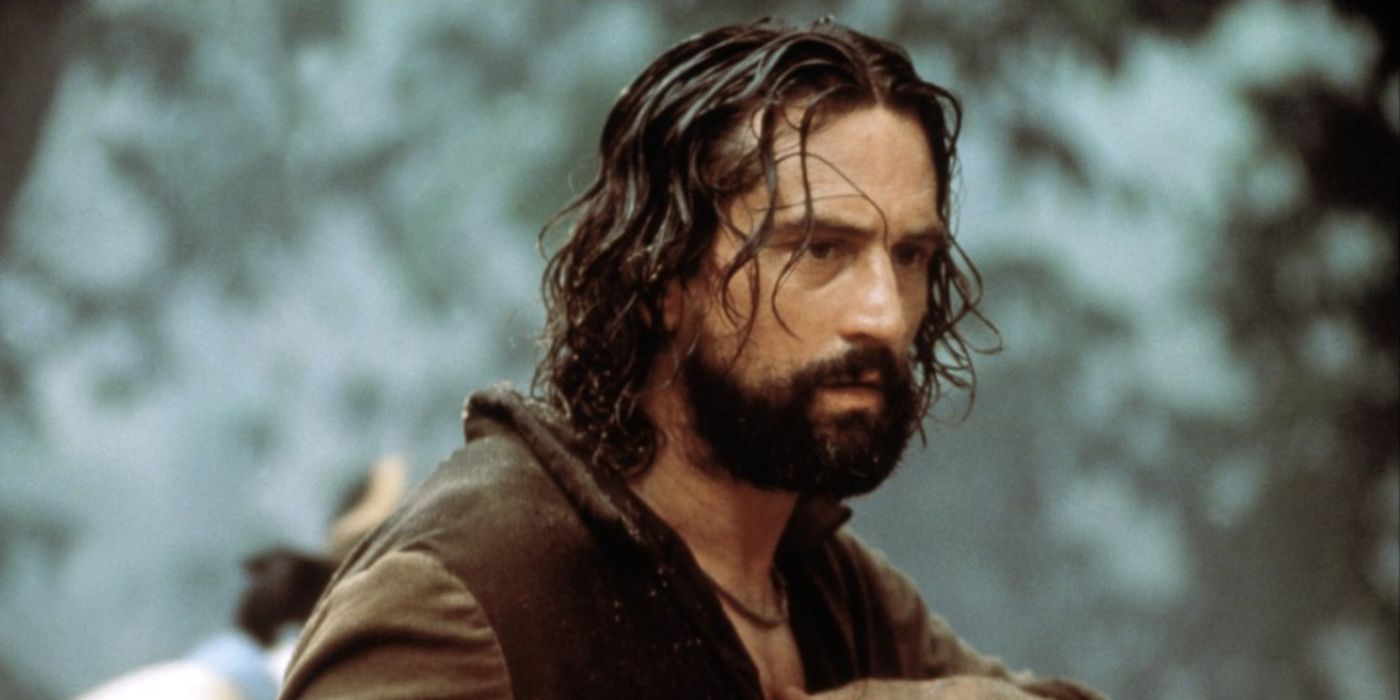
On the other side of the world, De Niro’s Captain Mendoza — a brutal mercenary and slave trader — kills his half-brother in a duel after his fiancée declares that she loves his sibling more. Overridden with guilt and shame, Gabriel invites Mendoza on a brutal journey of penance. This invitation marks the beginning of Robert De Niro’s profound impact on this movie.
‘The Mission’ Is a Total 180 for Robert De Niro
Release Date
September 24, 1986
Runtime
126 minutes
Director
Roland Joffé
Writers
Robert Bolt
Producers
Alejandro Azzano, David Puttnam, Felipe López Caballero
At the time the movie was released, this Italian-American actor had already been performing for over 20 years. With all that accounted for, there is something brutally different here. It could have very well been the many natural hazards of Iguazú Falls (the bordering forests between Argentina and Brazil) complementing his character’s growth or his outright perfection in portraying a tormented man. But Mendoza’s inciting incident at the beginning of The Mission is essential viewing for all movie buffs.
Carrying a massive sack of armor symbolizes Mendoza’s psychological burden after murdering his brother. When a Guaraní cuts it from his back, the gesture feels deeply symbolic. The subsequent path his character undergoes — from a cold soldier of fortune to a loving defender of the weak — helps The Mission become a timeless story, even though it’s all played out against a disturbing historical context.
Related
Best Robert De Niro Movies, Ranked
He’s played America’s most likable gangster and Scorsese’s right-hand man. Here are Robert De Niro’s best movies, ranked.
Both Church Times in London and the Vatican have recognized The Mission as a major religious work. The former even has the Roland Jeffe-directed movie as number one on their list. Their recognition matters because the film doesn’t shy away from mixing politics with religion. When faced with the threat of possible extinction by Portuguese rule, the Guaraní hit back by questioning Cardinal Altamirano’s right to God’s will (and why this hand is so against his people).
After becoming a full-fledged Jesuit, De Niro’s Mendoza makes it clear that he is willing to denounce this new position of his if it means he can take up arms for these native people. For The Mission being a religion-led story — and a celebrated one at that — colonial interests seem to have an upper hand on the all-powerful motif of faith. Even though the movie dares to follow history so closely, this dynamic is quite surprising.
‘The Mission’s Cinematography Will Stay With You
Warner Brothers
Through the internal struggles of the priests who are there at the time and the Guaraní’s undying devotion to them (even when they’re all about to be possibly killed), The Mission’s finale is haunting. We all know that there is no good ending here, but Chris Menges’ cinematography brings it all home. Wide shots of Altamirano surveying the Guaraní’s substantial structures underscore the success of their conversion efforts.
There’s no forgetting the purposefully slow and drifting camera movement which mimics the hesitant Guaraní in the final mass procession just before the massacre takes place. Most importantly, there is the very tight shot of Mendoza’s one possible weapon against the Portuguese and Spanish being cut down. He was then met with a sadistic grin by one of the opposing commanders.
Related
The 20 Best Catholic Movies Ever Made, Ranked
With the passing of Pope Francis, we take a look at great films infused with his Catholic faith.
Menges’ camera work is certainly a factor that helps this movie stand out against all the others in this subgenre. With God’s green earth as the backdrop, De Niro’s redeemed hero and the rest of the priests try to aid the defenseless Guaraní, but it just isn’t enough. Even if you don’t happen to instantly relate to the tidings of a priest, a member of an indigenous tribe, or a devout follower of any religion, the tragic feeling of being on the losing end of a battle like this one is something you just cannot ignore. As a result, The Mission lingers long after the credits roll. Stream The Mission for free on Tubi.
You can view the original article HERE.