







Fifty years later, although we have progressed far in menstrual education and acceptance, the shame surrounding women’s bodies and their reproductive functions can still crop up. Asurvey byAlways stated that 85% of young people have tried to hide the fact that they are on their period from others. Carrie’s blood in the film becomes avisible manifestation of the abject, apart of her body that society teaches her to conceal to remain socially acceptable. Keeping this scene within Flanagan’s adaptation substantiates and retains Creed’s idea of the reproductive system being an abhorrent and intimidating spectacle, with blood depicting adirect correlation between woman as demon, as monster, asquintessentially grotesque.
In the series, this humiliation extends beyond the locker room, and reflects aworld where shame can be documented and indefinitely circulated. Young women face not only peer cruelty but the prospect of digital embarrassment that outlasts the original incident, while Flanagan’s decision to involve American high school students in the writers’ room further grounds his portrayal in contemporary adolescent experience.
These anxieties exist within abroader landscape in which women’s bodily autonomy remains contested. In apost-Roe v. Wade United States, concerns overmenstrual surveillance include potential law-enforced access toperiod-tracking dataand proposals to record themenstrual histories of school athletes. In the UK, schoolbathroom restrictions and safeguardingguidance have raised similar concerns about bodily privacy and access to sanitation. Such developments echo Carrie’s humiliation.
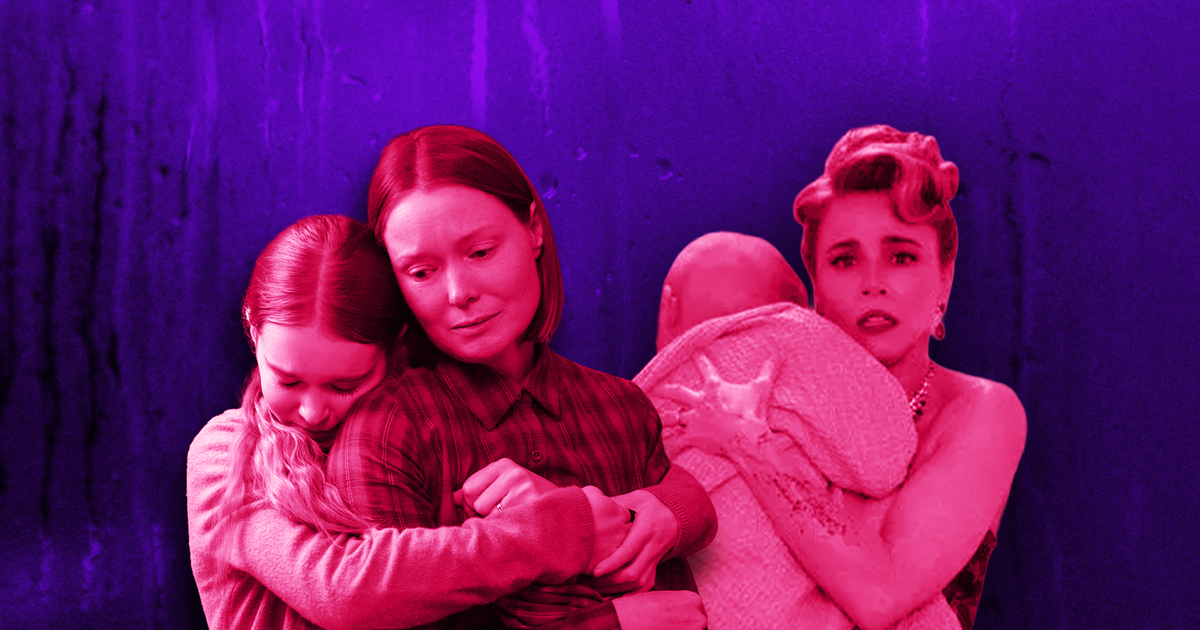
Margaret’s Christian fundamentalism leads her to treat sexual knowledge and adolescent independence as threats to Carrie’s purity. She refuses to serve ateenager buying sexual paraphernalia, and insists that it is “up to me what she knows and when” when challenged over Carrie’s ignorance of menstruation. Her authority reflectsconservatism’s wider desire to control young women’s access to information about their bodies and desires. Yet Margaret is not simply an embodiment ofright-wing oppressors – Flanagan also presents her as avictim, awoman terrified of acorrupt world who believes that keeping Carrie uninformed will protect her.
Margaret passes the shame she has internalised down to Carrie, becoming both acatalyst and cultivator of her rage. When Carrie finally calls her abully, years of repression become impossible to contain. Female monstrosity emerges not simply as resistance, but as the consequence of an oppressive cycle of fear and control. Unlike the 1976 film, in which Carrie kills Margaret in abrutal culmination of her insurrection, the series (spoilers ahead) has Adelaide (Kate Siegel), amember of the shadowy telekinetic group, kill her instead, depriving Carrie of afinal act of retribution and softening her potential redemption arc in order to secure asecond series.
Pamela Voorhees inCrystal Lake offers adifferent embodiment of monstrous femininity. Like Carrie, Jason Voorhees is labelled a ‘freak’ by his peers. But whilst Margaret White weaponises Carrie’s exclusion to dogmatise her own authoritarianism, Pamela sees her son as perfect and internalises his rejection as her own failure as amother, fuelling her rage. In the originalFriday the 13th(1980), Pamela is revealed as the hidden killer in the penultimate scene. Initially, audiences suspect Jason, and fans have long debated whether Pamela could carry out the murders alone. Her revelation as the killer embodies the monstrous feminine, an unassuming mother whose violence challenges conventional motherhood, even as it emerges from maternal devotion. InCrystal LakePamela is granted greater agency, her murderous streak emerging before Jason’s familiar voice reappears, her violence ultimately separated from her son’s influence.